Dr. Grant Jacobson of The Hometown Veterinarian was recently featured as a guest on The Hissing Feline podcast, discussing an important and often overlooked topic in feline health:
“How to Recognize and Address Stress in Cats.”
Understanding Stress in Cats
Cats are uniquely wired to be constantly aware of their surroundings. As Dr. Grant Jacobson explained during the podcast, “Cats are both predator and prey animals. They’re constantly looking for things to eat, but they’re also always trying to avoid being eaten—and that instinct never goes away.”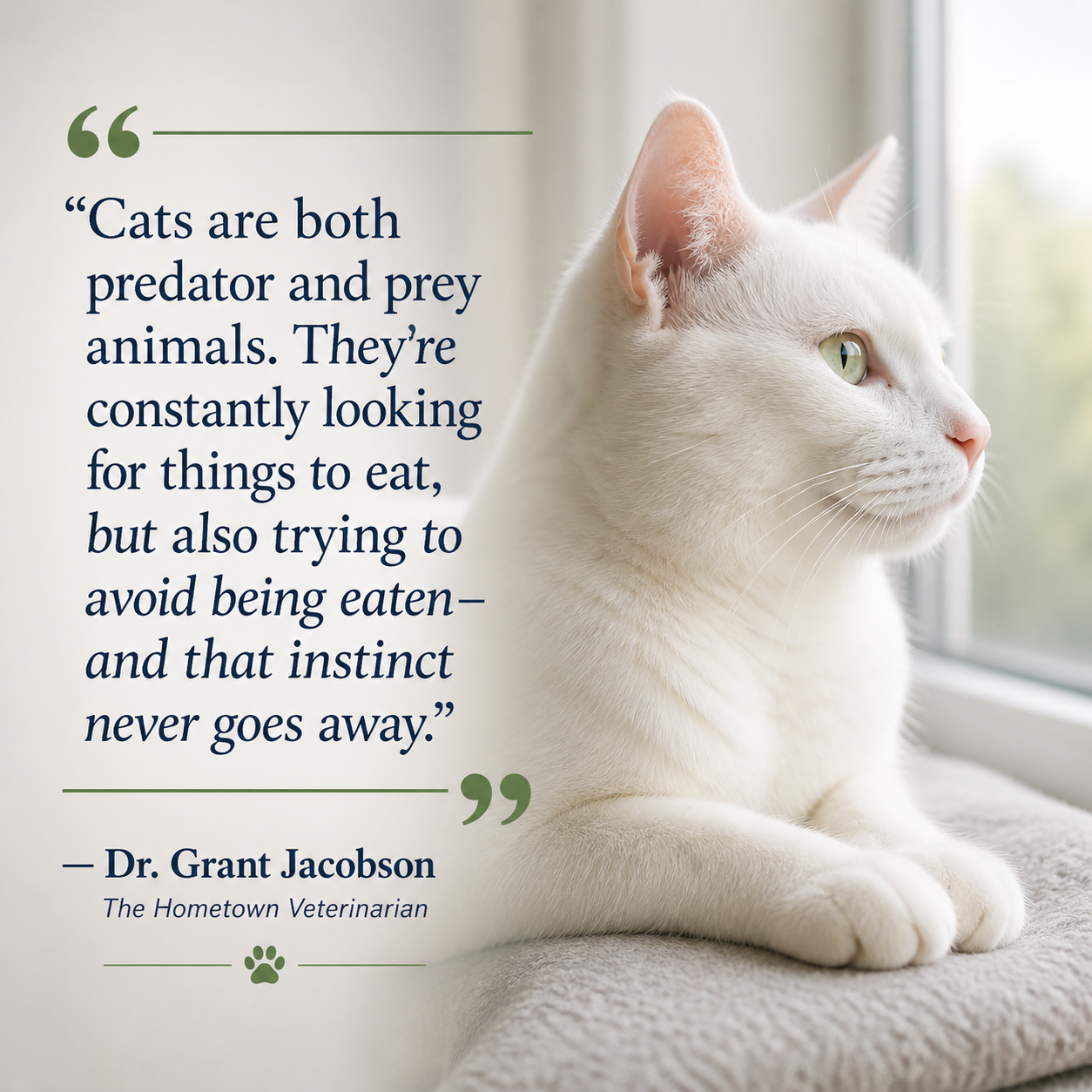
This dual instinct is part of what makes cats so perceptive, but it also means they are highly sensitive to stress—even in environments that seem safe and stable to us. What may appear to be minor changes in a home can have a meaningful impact on a cat’s sense of security.
Stress in cats is often misunderstood as purely a behavioral issue, but its effects go far beyond that. “Stress in cats is very often unrecognized—but it can lead to real physical disease, not just behavior changes,” Dr. Jacobson noted. Conditions such as urinary inflammation, gastrointestinal issues, and other chronic problems are frequently linked to ongoing stress. Recognizing and addressing these factors early can play an important role in maintaining long-term health.
One of the challenges in identifying stress in cats is how well they conceal it. “Cats are masters at hiding illness. Every instinct in their body is to hide whatever is making them not feel good.” Unlike many other animals, cats may not display obvious signs when something is wrong. Instead, subtle changes—such as becoming more withdrawn, changes in appetite, or shifts in routine behavior—may be the only clues that a problem exists.
Because of this, there is rarely a single, simple solution. “Every case needs to be looked at individually—there isn’t one answer for every cat,” Dr. Jacobson explained. Addressing stress requires a thoughtful evaluation of the entire picture, including the cat’s environment, daily routine, social interactions, and medical health.
At The Hometown Veterinarian, this individualized approach is central to how we care for our patients. By looking beyond surface symptoms and considering the full context of each case, we aim to support both the immediate wellbeing and long-term health of every cat we see.
Listen to the Full Episode
We invite you to listen to the full conversation to learn more about recognizing and addressing stress in cats:
 [Listen to the Episode]
About The Hometown Veterinarian
Located in Marshalltown, Iowa, The Hometown Veterinarian is dedicated to providing high-quality, compassionate care with a focus on individualized treatment and long-term health outcomes.